

Where to Splurge and Save on Home Design & Renovations
/An Interior Designer’s Guide to spending wisely and creating a home you love.
Have you ever fallen in love with a beautiful piece of furniture, a gorgeous light fixture, or a handmade tile, only to look at the price tag and wonder, Is it really worth it?
Whether you're renovating your kitchen, furnishing a new home, or simply refreshing a room that's feeling a little tired, figuring out where to spend your money can be overwhelming. There are so many beautiful things out there (it's very easy to get carried away).
But here's something I've learned over the years as an interior designer:
Creating a beautiful home isn't about spending the most money. It's about knowing where your money will make the biggest difference.
Some things are absolutely worth investing in. Others? Not so much. I believe the most interesting, welcoming homes are a thoughtful mix of high and low, old and new, special investment pieces and unexpected little treasures. A home should feel collected over time, not as though everything arrived from the same showroom on the same afternoon.
And perhaps most importantly, the decisions you make should reflect how you actually live. So, whether you're planning a major renovation or just looking to make a few thoughtful updates, let's talk about where I recommend splurging, where you can comfortably save, and how to create a home that feels rich in all the right ways.
1. Renovations: Splurge on What Matters Most to Your Lifestyle
When it comes to home renovations, I always encourage clients to begin by thinking about how they use their spaces. What does a typical day look like? Where do you spend the most time? What activities bring you joy? And what parts of your home need to work especially hard?
The answers are different for everyone, and that's exactly why renovation budgets shouldn't be approached with a one-size-fits-all mentality.
A Real-Life Example: A Chef's Kitchen in a Midcentury Home
One of the things I've learned over the years is that the best design decisions aren't always about what looks the most beautiful. They're about understanding how someone lives, what matters most to them, and where investing a little more will make the biggest difference.
Recently, I worked with a client who purchased a midcentury home and was planning to renovate both her kitchen and bathrooms. She is a chef, so naturally, the kitchen is important to her. The kitchen is a place where she spends a great deal of time doing something she loves, and she had very specific ideas about how she wanted it to function. And I loved that she knew exactly what she wanted.
Where We Chose to Splurge
She knew what she wanted in terms of her kitchen appliances. They were certainly an investment, but she knew how they performed, trusted their quality, and understood exactly what she needed from them. For her, these weren't unnecessary luxuries. They were tools that supported the way she cooked.
Cabinetry was another area where we prioritized quality. I recommended a custom cabinet workshop I'd worked with on previous projects because I knew the level of craftsmanship and attention to detail they brought to their work. My client also understood that beautiful cabinetry is about so much more than what you see on the outside. The construction, materials, and hardware all play an important role in how well a kitchen functions and holds up over time.
For the countertops and island, she wanted high-quality stainless steel, a practical choice that made perfect sense for someone with a professional cooking background. It's durable, hygienic, and well suited to a hardworking kitchen.
And then came the fun part! She wanted handmade backsplash tiles that would bring personality and a little playfulness into the space. They were more expensive than standard tile, but they added something special to the kitchen, and she was happy to invest in them. I love when clients aren't afraid to have a little fun with their material choices, especially when those choices reflect their personality.
One of my favorite details was the custom window bench, which the same cabinet workshop created for us. It turned out beautifully and added a welcoming little place to sit and enjoy the space. It's those little moments in a home that I love, the ones that invite you to slow down and enjoy being there.
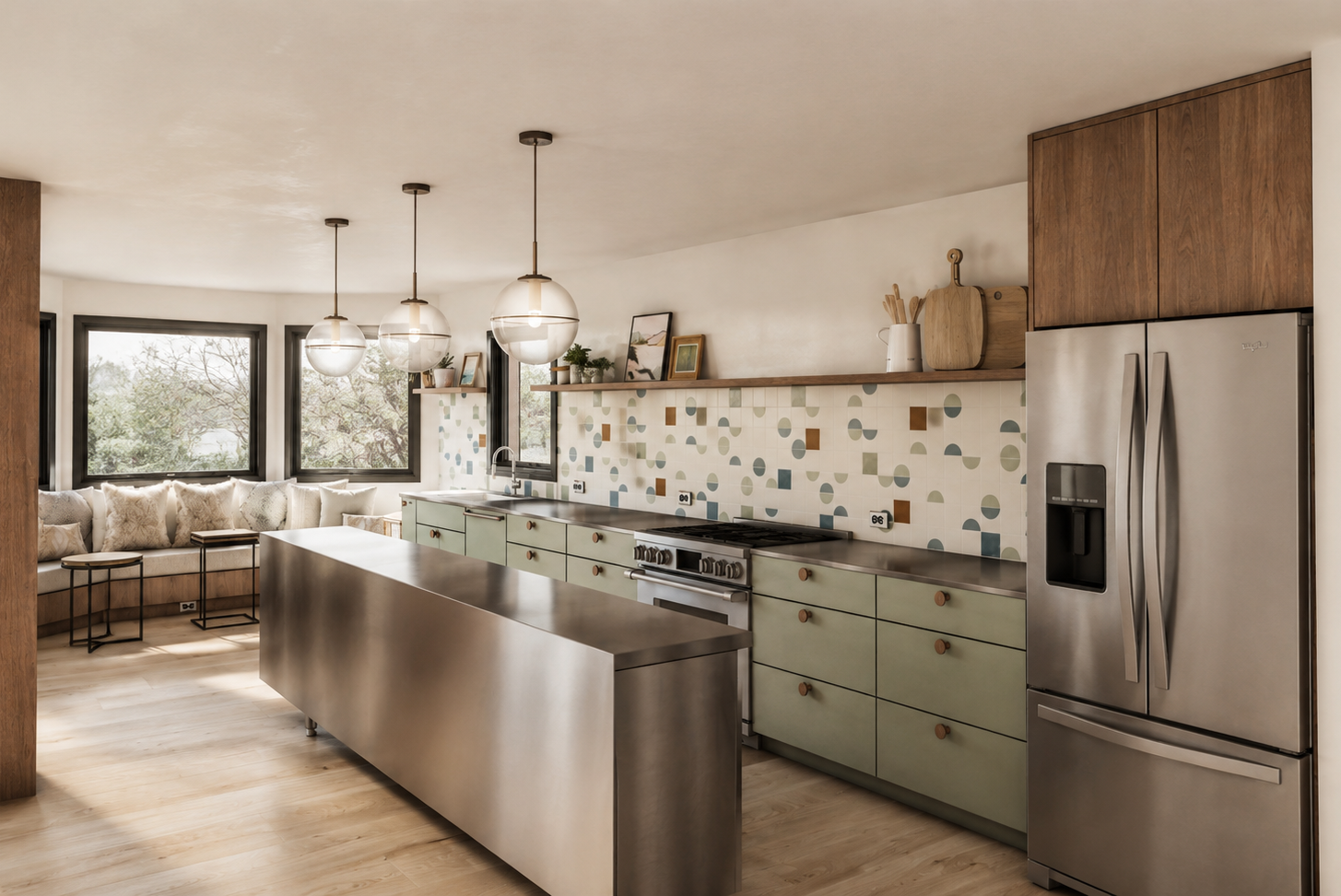
rendering of mcm kitchen
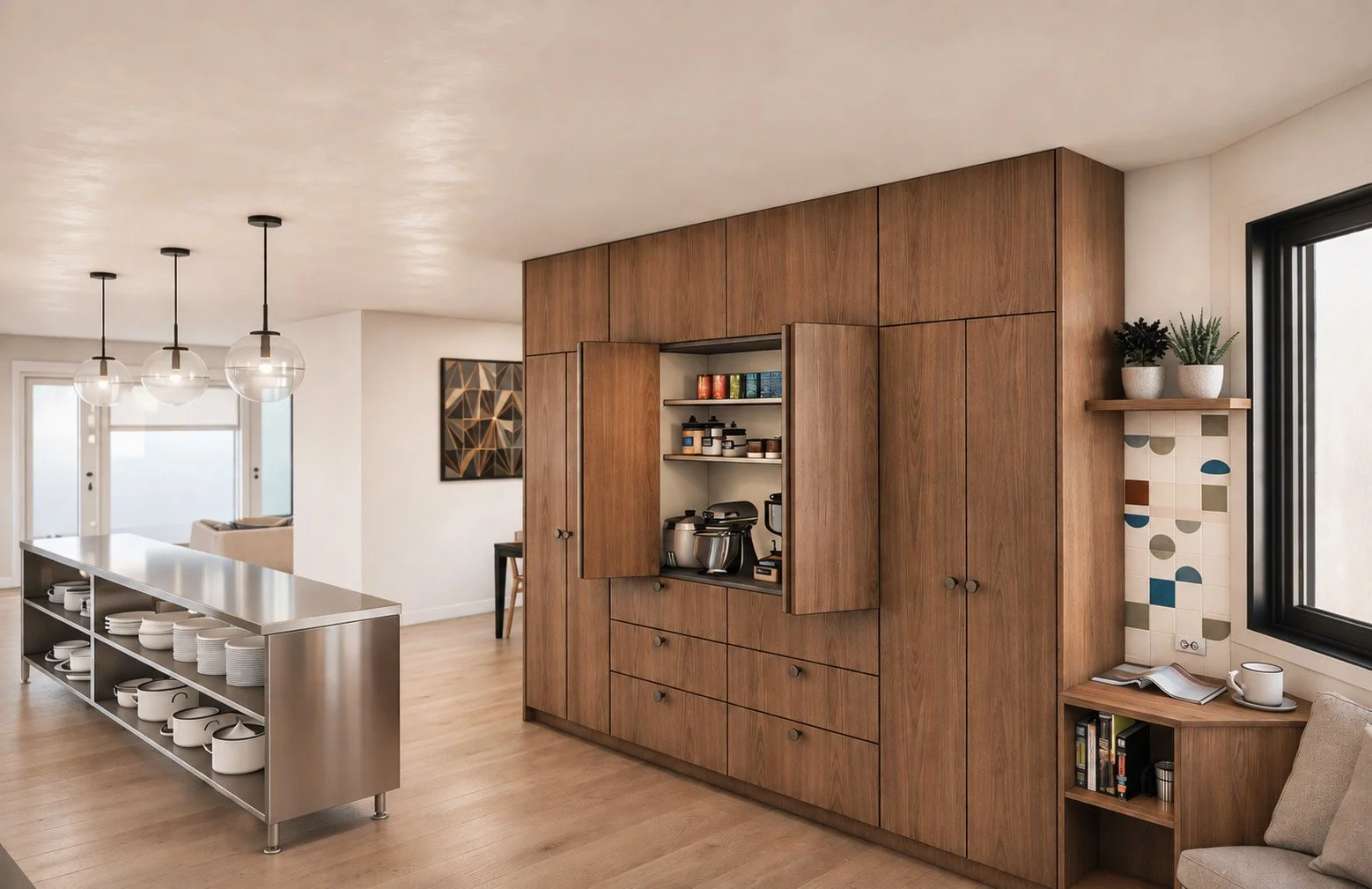
Rendering of mcm kitchen
When Function Came Before Aesthetics
There were also a couple of decisions during this renovation that reminded me why function sometimes needs to take priority over aesthetics. For example, I initially suggested a paneled refrigerator. I love how a paneled refrigerator blends seamlessly with the cabinetry, creating a clean, cohesive look. But not every refrigerator is designed to accommodate cabinet panels, and my client wanted a deeper refrigerator with the storage capacity that worked best for her cooking needs.
So she chose the stainless steel refrigerator she wanted. Would I have loved a paneled refrigerator? yes! But was it was it the right choice for my client? No. And at the end of the day, she's the one cooking in that kitchen, not me! Besides, the stainless steel refrigerator worked beautifully with the other appliances and countertops, so it still felt cohesive.
Another decision involved the trash and recycling. I would typically suggest integrating them into the base cabinetry to keep everything tucked neatly out of sight. But my client preferred a separate trash can because it worked better with her cooking routine. And that was perfectly fine, too. As designers, we naturally think about how a space looks. We want everything to feel cohesive, balanced, and beautiful, but sometimes we need to put our own aesthetic preferences aside and listen to what our clients really need.
A kitchen doesn't have to have every appliance concealed or every functional element hidden away to be beautifully designed, especially when the person using it knows exactly how they want their space to work.
Where We Chose to Save: The Bathrooms
While we invested in the kitchen, we took a different approach to the bathrooms. Rather than spending on custom vanities, we selected beautiful premade options. We found affordable tile that still felt thoughtful and elevated, and my client visited a bathroom showroom to select good-quality, midrange plumbing fixtures rather than the most expensive models.
The bathrooms were still beautiful and functional. They simply didn't require the same level of customization and investment as the kitchen. And that's what I love about this project, we weren't trying to make every room equally expensive or fill the house with high-end finishes just for the sake of it. We were making decisions based on what mattered most to my client and how she wanted to live in her home.
For this client, investing in a kitchen that supported her passion for cooking was absolutely worth it. And by making more budget-conscious choices in the bathrooms, we were able to balance those investments without compromising on the overall design.
It was also a wonderful reminder that good design isn't about imposing a particular look or following a set of rules. It's about creating a home that functions beautifully for the people who live there.
Saving doesn't mean settling, and splurging doesn't always mean choosing the most expensive option. It's about knowing what matters most and making those choices with intention.
My Renovation Advice: Invest in the Things That Are Difficult to Change
Beyond individual finishes, there are certain parts of a renovation where I generally encourage clients not to cut corners. Good space planning, quality construction, proper waterproofing, reliable installation, and durable materials are all worth prioritizing. These are the things that aren't always immediately visible in a finished photograph, but they make an enormous difference in how a home functions and ages.
On the other hand, you don't necessarily need the most expensive tile, countertop, or cabinet hardware to create a beautiful space. A simple, well-chosen material installed thoughtfully can be every bit as lovely as a luxury alternative.
Designer Tip: Before investing in an expensive finish, ask yourself whether you're paying for better performance, lasting quality, or something you genuinely love?
2. Furnishings: Invest in Comfort & Quality, Mix High and Low
When it comes to furnishing a home, I'm a big believer in mixing high and low. Some of my favorite interiors combine beautifully made furniture with secondhand finds, vintage pieces, and more affordable items. It's this combination that creates a home that feels layered, personal, and interesting. Not everything needs to be a splurge. And honestly, I think a room can feel a little too precious when everything in it is.
Splurge on the Sofa, Save on the Occasional Tables
If there's one piece of furniture I always encourage clients to invest in, it's the sofa. Think about how much time we spend there. Curling up with a book, watching a movie, chatting with family, or simply relaxing after a long day. A sofa needs to do more than look beautiful. It needs to feel good, support your body, and stand up to everyday living.
A well-made sofa with quality construction, comfortable cushions, and durable upholstery can be a worthwhile investment for years to come. And if there's a lounge chair you've had your eye on forever? Something you absolutely love and can imagine enjoying for a long time? That might be worth splurging on, too. Try going low on your occasional tables, that’s where I'd consider saving. A vintage side table, a secondhand coffee table, or a simple contemporary piece can look wonderful alongside a beautiful investment sofa, I love that contrast. It creates a room that feels collected rather than overly coordinated, and it gives you the freedom to invest in the pieces that really matter.
Mix Old and New in the Dining Room too, I love the idea of finding an old wooden farmhouse table at a secondhand shop or antique market. Something with a little history, a few imperfections, and plenty of character. There's something wonderfully freeing about a table that already has a story or is already a bit banged up, haha. You don't have to worry quite so much about every little mark or stain. It's a table meant to be used, shared, and enjoyed. Then pair it with a set of fun contemporary dining chairs that brings an unexpected modern element into the space. I love mixing old and new, rustic and refined. It adds personality and keeps a room from feeling too predictable.
Splurge on the Bed, Save on the Bedside Tables
Our bedrooms should be places where we can truly rest and recharge. And considering how much of our lives we spend sleeping, I think investing in a comfortable, supportive mattress is a no-brainer. A well-made bed frame is equally worth considering. You want something sturdy, beautifully constructed, and built to last. After all, it's a piece of furniture you'll use every single day, and a good-quality frame can stay with you for many years. A headboard can be part of that investment, too, especially if you find something you really love. But it doesn't necessarily need to be elaborate or expensive. Sometimes a simple, well-designed headboard is all you need to make a bedroom feel complete.
So where would I save? The bedside tables! There are so many wonderful options that don't require a big investment. I love vintage nightstands, simple wooden tables, or even two mismatched pieces that work beautifully together. They can add warmth, character, and a little personality to a bedroom without competing with the bed itself. And who says everything has to match? Sometimes those unexpected combinations are what make a room feel more interesting and collected over time.
Bedroom lighting and rugs are two other areas where you can be a little more budget-conscious. There are so many great manufacturers offering beautiful, well-designed options at reasonable prices. You don't need to spend a fortune to find a lovely bedside lamp or a soft, inviting rug that brings the whole room together. It's really about choosing pieces that complement the space and create that cozy, restful feeling we all want in a bedroom.
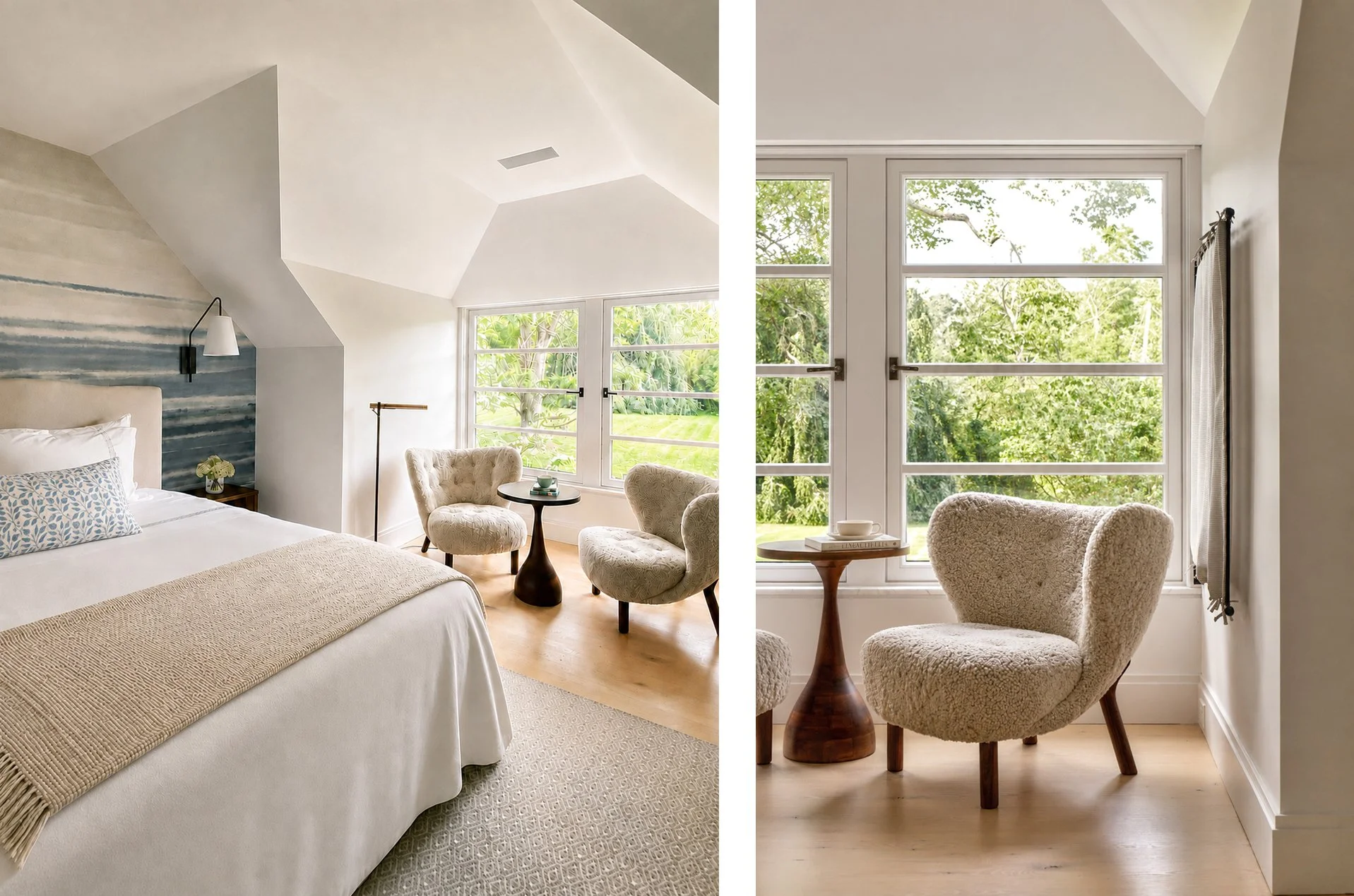
Cozy Bedroom with Little Petra Lounge Chairs (my personal fav)
Be Selective About Where You Splurge on Rugs
Rugs are another category where I think it's important to consider how each room is used. A beautiful wool rug in a living room can be a wonderful investment. Wool is naturally resilient, and a well-made, can bring warmth, texture, and character into the space.
But that doesn't mean every room needs an expensive rug. For bedrooms, kitchens, nurseries, and entryways, there are plenty of affordable options that can work beautifully. In areas where spills, dirt, or frequent cleaning are concerns, practicality may matter more than having a costly investment piece. And for a dining room with young children, a durable, easy-to-clean rug might actually be the smarter choice. I always encourage clients to think about their lifestyle before choosing a rug.
Designer Tip: Invest in furniture that supports your comfort and daily routines. Balance those pieces with vintage finds and affordable accents that bring character without stretching your budget.
3. Lighting: Splurge on the Statement, Save on the Supporting Cast
If there's one design element that can completely transform the feeling of a room, it's lighting. You can have beautiful furniture, the perfect paint color, and a thoughtfully designed space, but if the lighting isn't right, something will always feel a little off. Lighting has an incredible ability to change the atmosphere of a home. It can make a room feel warm and welcoming, calm and restful, or bright and energizing. And I think it's one of the most overlooked parts of a decorating budget.
Splurge on a Beautiful Statement Fixture
A sculptural pendant over a dining table or a beautiful light fixture in an entryway can become one of the most memorable elements in a home. These are the places where I often encourage clients to invest in something special.
I like to think of a dining room or kitchen island pendant as a piece of art that happens to give off light. It creates a focal point and brings personality into the room. The same goes for an entryway, it's the first impression of your home, and a thoughtfully chosen fixture can set the tone for everything that follows. That doesn't mean you need to purchase the most expensive fixture available. But if you find something beautifully made that you genuinely love, it may be worth allocating a little more of your budget to it. I feel the same way about wall sconces. Because they’re typically hardwired and more permanent, I think it’s worth investing in something well-made that you’ll love for years to come.
Save on Table Lamps and Floor Lamps
This is where I like to balance things out. There are so many manufacturers offering beautiful, reasonably priced table lamps and floor lamps. You can find interesting shapes, lovely materials, and soft fabric shades without spending a fortune. And because these are pieces you can move around or change as your home evolves, they don't always need to be major investments. I also love mixing lighting styles. A sculptural pendant can look wonderful alongside a simple ceramic table lamp or a vintage floor lamp. Not every fixture needs to compete for attention.
Don't Skimp on the Lighting Plan!
One area where I wouldn't cut corners, particularly during a renovation, is the lighting plan itself. Good lighting is about more than choosing beautiful fixtures. It's about making sure you have the right light in the right places. I like to think about lighting in layers. Ambient lighting provides general illumination, task lighting helps with activities like cooking or reading, and accent lighting draws attention to artwork, architectural details, or other special features.
Dimmers are another detail I always recommend, being able to adjust the light throughout the day makes such a difference. Bright and functional when you need it, soft and cozy when you don't. And let's not forget the bulbs themselves, the color temperature and quality of light matter just as much as the fixture.
I generally gravitate toward warm, inviting light in living spaces while making sure kitchens, bathrooms, and other work areas have appropriate task lighting. I'd much rather see a home with a thoughtful lighting plan and a mix of fixtures at different price points than one filled with expensive lighting that doesn't actually make the space feel good.
Designer Tip: Invest in the fixtures that define a room, but don't underestimate what an affordable lamp, a warm lightbulb, and a dimmer can do.
4. Art & Accessories: Splurge on What You Love, Save on the Little Things
Accessories are where a home really begins to tell your story. They're the finishing touches that bring warmth, character, and personality into a space. And the good news is that you don't need to spend a fortune to make your home feel beautifully collected.
Splurge on Art That Speaks to You
I'm a big believer in investing in a piece of art that you truly love, especially in a living room or dining room where it can become a focal point. It doesn't need to be from a famous artist or come with an impressive price tag, it just needs to make you feel something.
Maybe it's a painting that reminds you of a favorite place, a photograph that transports you somewhere else, or an abstract piece that brings just the right energy into a room. Art is deeply personal, and when you find something that really speaks to you, I think it's worth considering as an investment. But that doesn't mean every wall needs an expensive piece.
Smaller works from local artists, vintage prints, flea market discoveries, and beautifully framed personal photographs can add just as much character throughout the rest of your home. In fact, I love the mix, a special piece of art alongside smaller, more unexpected finds makes a home feel layered and collected over time.
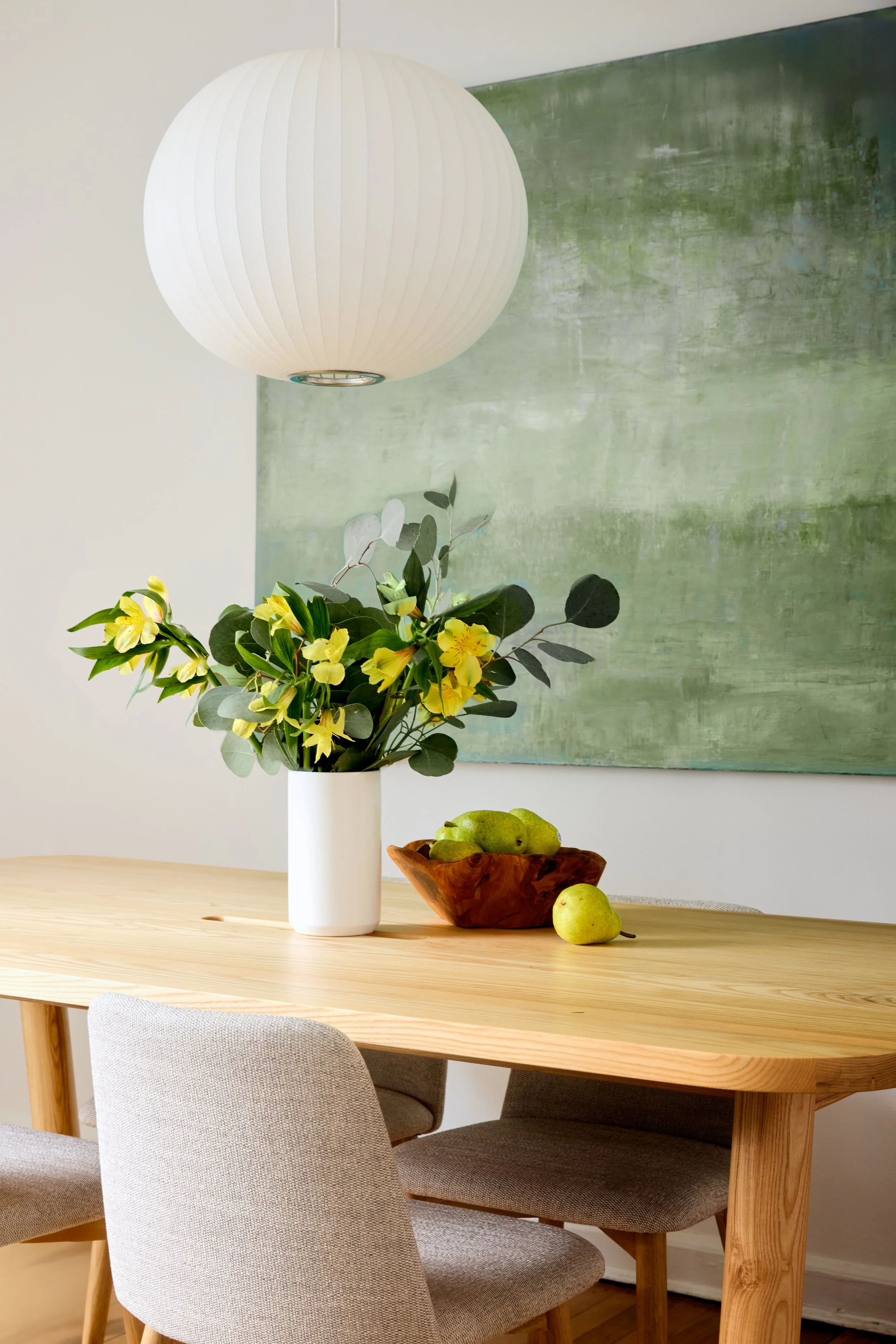
Save on Pillows, Throws, and the Things You Love to Change
Decorative pillows and blankets are wonderful places to save, especially if you're someone who enjoys refreshing your home from time to time. A new pillow cover, a cozy throw, or a little change in color and texture can give a room an entirely different feeling without replacing your larger furnishings. And because these are things you might want to change with the seasons or as your tastes evolve, there's really no need to spend a small fortune on every one of them.
I do like to pay attention to how fabrics feel, though. A soft cotton or linen pillow cover or a comfortable throw can make even a simple, affordable piece feel special. And rather than constantly buying new things, consider changing pillow covers, rotating what you already own, or bringing out favorite textiles at different times of the year. Sometimes a small refresh is all a room needs.
Find the Unexpected at Flea Markets and Antique Shops
Some of my favorite decorative pieces have come from flea markets and antique shops. I love discovering objects that have a little history, interesting texture, or an unexpected purpose. I found a few little wooden stools that I now use as plant stands, and they look really cute! They're simple, full of character, and bring so much warmth to the spaces they're in.
That's what I love about secondhand finds, you don't always have to use something for its original purpose. An old stool can become a plant stand, a vintage vessel can hold branches from the garden, and a beautiful little dish can become a place to keep everyday treasures. These are often the details that make a home feel truly unique.
Designer Tip: Choose one or two pieces that have real meaning to you, then add in the smaller details.
5. Before You Spend, Ask Yourself These Three Questions
Whether you're selecting countertops, investing in a sofa, or deciding if that beautiful pendant is worth the splurge, I think it helps to pause and ask yourself a few simple questions.
1. How much will I use it?
If it's something you interact with every single day, comfort, quality, and durability should probably be higher on your list. Think sofas, bed, kitchen cabinetry, and the materials that need to stand up to daily life.
2. Will I still love it five or ten years from now?
This doesn't mean everything in your home needs to be neutral or timeless in the traditional sense. Sometimes the boldest, most colorful piece is the one you'll love forever. But I do think it's worth distinguishing between something you genuinely connect with and something you're drawn to simply because it's trending.
3. Does it make my home function or feel better?
This is perhaps my favorite question. Does that investment improve the way you live? Does it make your home more comfortable, more welcoming, or more supportive of your daily routines? Does it bring you joy every time you see it? If the answer is yes, it may be worth the splurge. And if not, perhaps that's a place where you can save.
A Home That Feels Rich in All the Right Ways
At the end of the day, creating a beautiful home isn't about buying the most expensive version of everything. It's about being thoughtful with your choices, understanding your priorities, and creating spaces that support the way you want to live. Sometimes that means investing in beautifully crafted kitchen cabinetry or a sofa you'll enjoy for years. Other times, it means finding the perfect old farmhouse table at a secondhand shop or bringing home a charming little wooden stool from a flea market.
I believe the most meaningful homes are a mix of all these things. The pieces we save for, the unexpected treasures we stumble upon, and the everyday comforts that make our lives a little better. And really, isn't that what creating a home is all about?
